
Why Your Resume Isn’t Getting Seen: The Truth About ATS and What Recruiters Actually See
If you’re applying for jobs and not tailoring your resume, you are missing interview opportunities. You can’t take one generic resume and send it to fifteen completely different job titles because many companies use something called an Applicant Tracking System (ATS) to filter resumes that don’t match the exact job description. If your resume doesn’t use the same language as the posting, it might never reach a recruiter.
What Is an ATS?
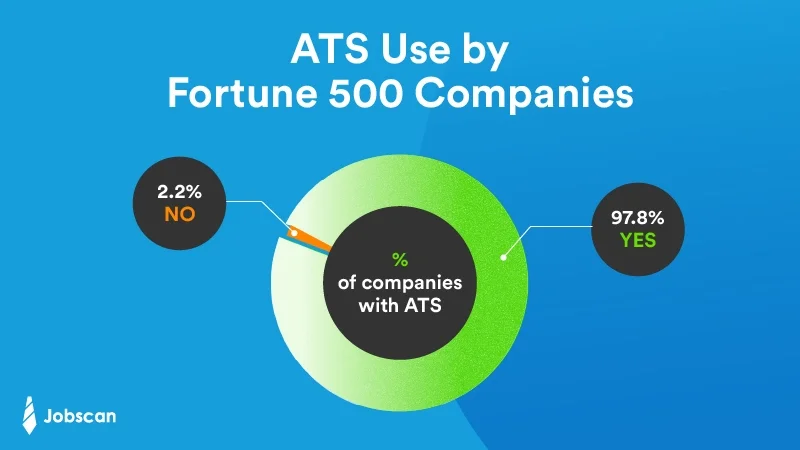
An Applicant Tracking System (ATS) is software that companies use to organize, rank, and filter job applications. About 97.8% of Fortune 500 companies rely on ATS to manage their recruiting.
These systems scan resumes for keywords and rank them based on how closely they match the job posting. Out of hundreds and thousands of resumes, only the top group, sometimes just 20 to 30 resumes, actually make it to a recruiter’s review list.
In other words, before a person ever looks at your resume, a system does. That system isn’t looking for creativity or passion, it’s looking for keyword matches, structure, and relevance. This should be your primary focus.
What I Learned About ATS from Jobscan
I’ve heard about Jobscan here and there, but didn’t realize all the features it has until recently.
The top things I found interesting about the Applicant Tracking Systems (ATS) many companies use to recruit and hire are
Even small wording changes in your resume versus the job description can affect your match rate (like using “marketer” while the job posting used “marketing”).
Each ATS scans resumes differently, so what works for one might not for another.
Most times you can figure out which ATS a company is using by looking at the job post URL. In Jobscan, you can then select that specific ATS and see how it works, what it favors, and what to avoid.
You can actually test your resume in Jobscan to see how it performs. You can upload a job description along with your resume, and they even suggest edits and revisions.
The resume you print and bring to a career fair might look different from the one you upload to the ATS. The uploaded one might have specific language for the sake of working better with the system.
Applying for jobs now feels like you’re playing a game, and it kind of is. You’re competing not just against other candidates but also trying to find favor with the ATS system.
What Recruiters Actually Filter For
A Jobscan survey found that recruiters typically filter candidates in this order:
Skills – the first and most important filter. Recruiters search for exact skills listed in the job posting.
Education – degrees, certifications, or relevant coursework.
Job Titles – how closely your previous roles align with the current opening.
Years of Experience – to confirm you’re at the right level for the job.
Location – especially relevant for hybrid or in-person roles.
If your resume doesn’t align with these filters, it can be rejected automatically before a human ever sees it.
If possible, add the job title for the role you are applying to in your resume. “According to a Jobscan survey, resumes with the job title received 10.6 times more interview requests than those without the job title.”
Not All ATS Are the Same
Each system operates differently. Here are a few of the common ones:
Workday – Ranks resumes with letter grades (A, B, C, D). Recruiters typically start with the A’s.
SAP SuccessFactors – Provides a “skills match” percentage showing how closely your background fits the posting.
iCIMS – Recruiters type in specific keywords; if your resume doesn’t contain those exact terms, it may never appear in their search. (Used by companies like Amazon and AWS)
Why Keywords and Metrics Matter
ATS tools are literal. If the job post says “data analysis” and your resume says “data evaluation,” it may not register as a match. Use the same keywords found in the job description to increase your ranking.
But keywords alone aren’t enough. You also need measurable achievements, numbers that prove your results. Instead of saying “responsible for managing a team,” say “led a team of 10 to deliver 8 major projects ahead of schedule.” Numbers catch attention, both in ATS scoring and during recruiter review.
Here’s a formula:
Action verb + what you did + measurable result
For example:
Increased student engagement by 35% through redesigned training sessions.
Reduced project turnaround time by 20% through improved workflow tracking.
This is how you turn responsibilities into achievements and achievements into interviews.
LinkedIn Is Part of the Screening Process
Your resume isn’t the only thing recruiters check.
95% of recruiters look at your LinkedIn to vet you.
Many ATS tools connect directly to LinkedIn, allowing recruiters to save your profile, track updates, and see when you post or engage.
If your LinkedIn isn’t updated, it’s working against you. Match your keywords, highlight achievements, and keep your activity professional and visible.
(Posting once or twice a week is a great place to start. It can be a summary from an interesting webinar, an achievement, a recap of your professional day, a lesson learned etc.)
The Power of a Cover Letter
Cover letters still matter. According to Jobscan’s State of the Job Search report, having a cover letter increases your interview chances by 3.4 times.
It’s your opportunity to show personality, explain transitions, and make a connection beyond what’s on your resume. A well-written cover letter can move you from “qualified” to “memorable.”
Don’t Overlook Referrals
Referrals remain one of the strongest ways to get hired. You’re more likely to land a job when someone inside the company refers you. Combine that with a strong ATS-friendly resume, and your chances increase dramatically.
The Numbers Don’t Lie
In 2023, about 59% of recruiters used ATS or AI tools to screen applicants.
In 2024, that number climbed to 71%.
After 2025, it may be even higher!
Recruiters depend on technology to manage speed and volume. Your resume, LinkedIn, and cover letter need to work together to pass those filters and stand out once they do.
Bottom line: you’re not just applying for jobs, you’re competing with technology. Learn how it works, tailor your resume, use Jobscan to test it, and back up your experience with measurable results. That’s how you beat the system and get in front of the right people.
At NextJob Ready, we help job seekers understand how hiring technology works so you can outsmart the system. From building an ATS-friendly resume with measurable results to optimizing your LinkedIn profile and crafting a cover letter that stands out, we guide you step by step.
Your job search shouldn’t be a guessing game. With the right strategy, tools, and insider knowledge, you can beat the filters, get noticed by recruiters, and land interviews for the roles you want.